
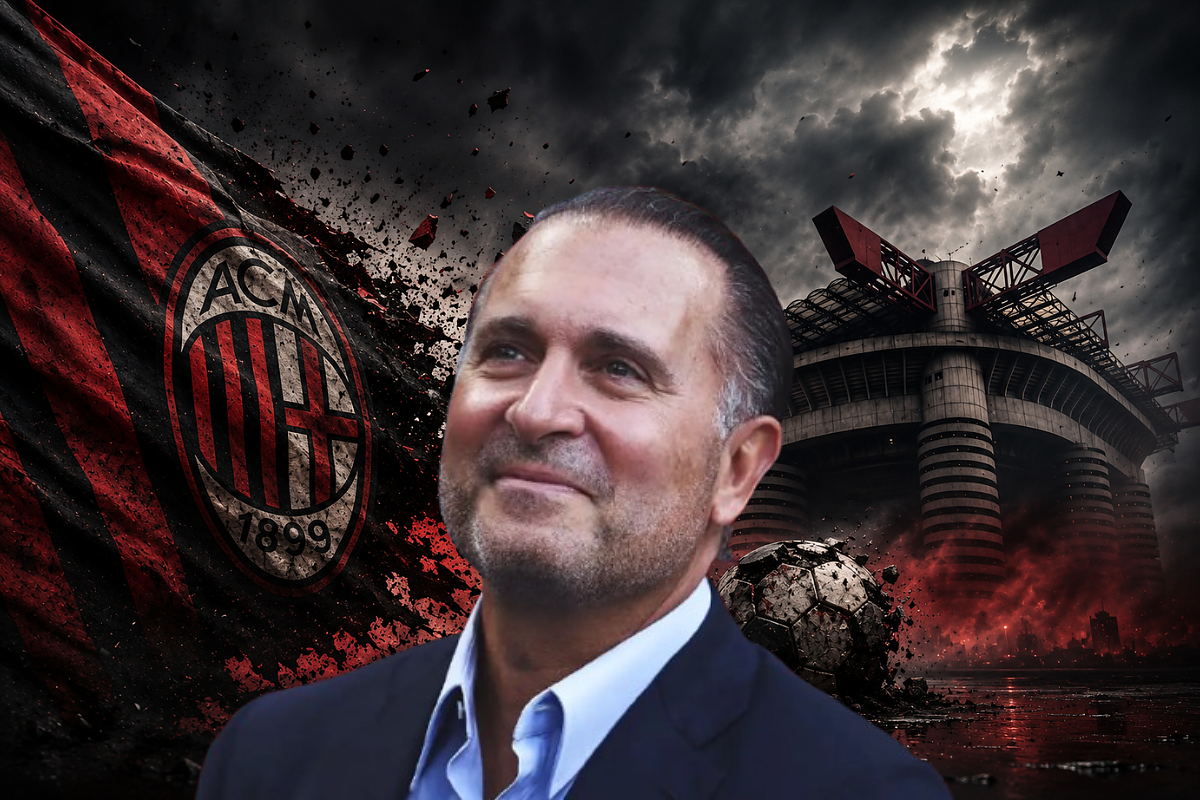
“You can't lose a Champions League final 5-0.” Cardinale doesn't mince words, a precise, cutting phrase. A statement that inevitably sets the derby with Inter on fire. The reference to the heavy Nerazzurri defeat suffered in Monaco at the hands of PSG in the final of the 2025 Big Ears Cup is direct and clear. A jab that comes via a long interview given by the Rossoneri number one in which he tries to relaunch the vision of his Milan, claiming sustainability, planning and a different model compared to that of the Nerazzurri cousins.
Per perdere una finale bisogna arrivarci
The question, however, is that certain provocations could sometimes be avoided, probably to make a better impression because otherwise they risk turning into a boomerang. In fact, to lose a Champions League final, you must first get there. And Inter, for better or for worse, has done it twice in three seasons in recent years, building a European path that Milan today can only watch from afar. This season the Rossoneri have watched Europe's top competition from the sofa and, considering the current situation, the real risk is that the scene could be repeated next year too.
It is here that Cardinale's sentence shows all its fragility. Punching Inter can serve to unite the environment, ignite the pride of the fans or move the debate and therefore try to divert attention from the deep Rossoneri crisis. But at certain times perhaps it would be more useful to look at your own home. Because Milan is going through a moment of evident difficulty both on a technical and planning level: fluctuating results, an ill-defined identity, growing protests and a distance from the big teams in Europe that appears wider than the club imagined at the time of RedBird's arrival.
I problemi del Milan
During the interview, Cardinale also addressed the Rossoneri's problems without hiding too much. “I made mistakes,” he admitted, openly acknowledging the difficulties of his management. A rare admission in modern football, especially from an ownership often perceived as distant from the emotional side of the club. The passage on Champions League qualification is even stronger: "If we don't finish in the top four it's a failure." Clear words, which certify that even within the management there is an awareness of a season below expectations.
Cardinale then broadened the discussion to the Italian football system, defining it as not very modern and structurally behind the great European powers. He insisted on the need to build sustainable clubs, new stadiums and more international governance, reiterating that his goal is not to chase immediate success by sacrificing the club's economic future. A line consistent with the RedBird philosophy, but which continues to clash with the reality of an environment like that of Milan, historically accustomed to judging results above all.
And this is precisely the central crux of his declarations. Cardinale talks about vision, structure and gradual growth. But Milan, today, still seems far from being a team capable of consistently competing at the highest European levels. And so the dig at Inter inevitably ends up amplifying the comparison: on the one hand a Milan that talks about project and sustainability but still struggles to transform the vision into continuous results, on the other a rival that in recent years has nevertheless managed to establish itself permanently at the top in Italy and Europe.
In football, the line between provocation and communicative own goal is very thin. And Cardinale is discovering this more and more.